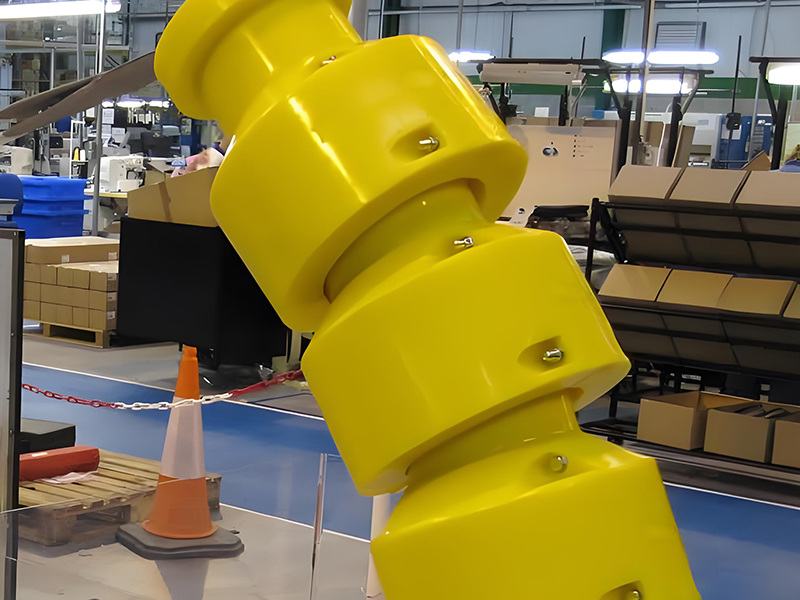
Introduction to Offshore Bend Restrictors
Offshore Bend Restrictors are mechanical devices installed on flexible pipes, umbilicals, and cables to prevent excessive bending. They allow for a certain degree of movement while preventing the sharp bends that could lead to cracking, fatigue, or catastrophic failure.
A bend restrictor works by interlocking articulated elements that lock together once a minimum bend radius is reached. Unlike a stiffener, which provides continuous resistance, a restrictor gives you a hard stop. It's the difference between a gentle speed bump and a concrete wall—both slow you down, but one is far more definitive.
Design and Engineering Considerations
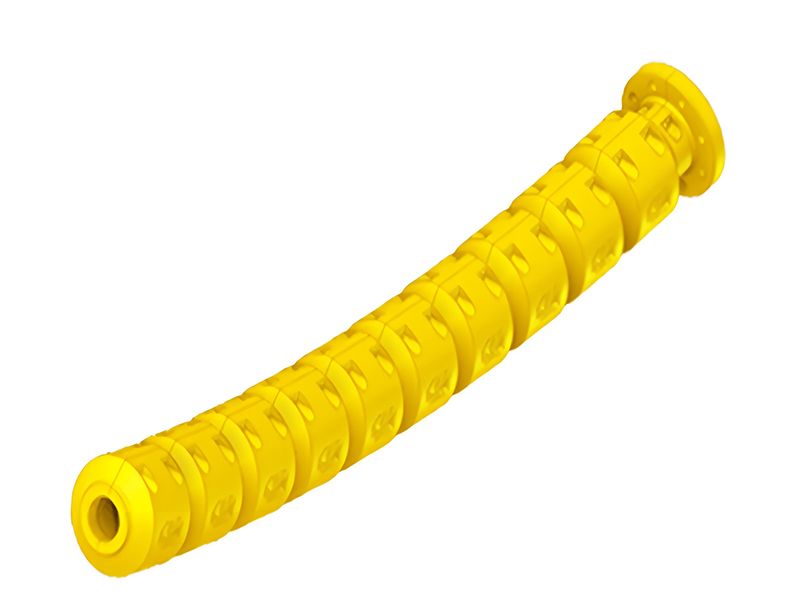
What factors must be considered when designing such Dynamic Bend Restrictor? Engineers need to account for pipe diameter, anticipated loads from waves and currents, and the fatigue life required to ensure a service life spanning decades. Polyurethane is a commonly used material due to its resistance to seawater corrosion and impact. The geometry of the interlocking components is also critical: each segment must move freely until a limit angle is reached, at which point it must transfer the load without crushing the pipe.
When the pipe tries to over-bend, the cones jam together. That jamming action is your bend restriction. The design must also handle installation forces—pulling a restrictor through a J-tube or over a reel is no gentle process.
| Parameter | Typical Range | Why It Matters |
|---|---|---|
| Bend Radius Limit | 5–15 × pipe OD | Prevents over-bending |
| Operating Depth | Up to 3,000 m | Affects material choice |
| Temperature Range | -20°C to 80°C | Ensures flexibility |
| Load Capacity | 10–500 kN | Withstands dynamic forces |
Manufacturing Process and Quality Control
The manufacturing process for Bend Restrictor involves producing polymer components using an integral molding technique. Specifically, this entails preparing a precision-machined steel mold, injecting molten polymer under high pressure, and allowing it to cure. After demolding, each component undergoes inspection for dimensional accuracy and surface defects, as any voids or cracks could become failure points under cyclic loading.
Quality control isn't just a final check—it's woven into every step. We run tensile tests, hardness tests, and full-scale bend tests on sample assemblies. Some even use acoustic emission monitoring to detect internal flaws.
Advantages of Sourcing from a Direct Manufacturer
Why skip the middleman? Let's break it down. First, cost savings—no distributor markup means you pay closer to the production cost. Second, customization—need a non-standard bend radius or a unique flange connection? A source manufacturer can tweak the mold or formulation without a lengthy approval chain. Third, lead time—when you buy direct, you're not competing with a distributor's other clients for production slots.