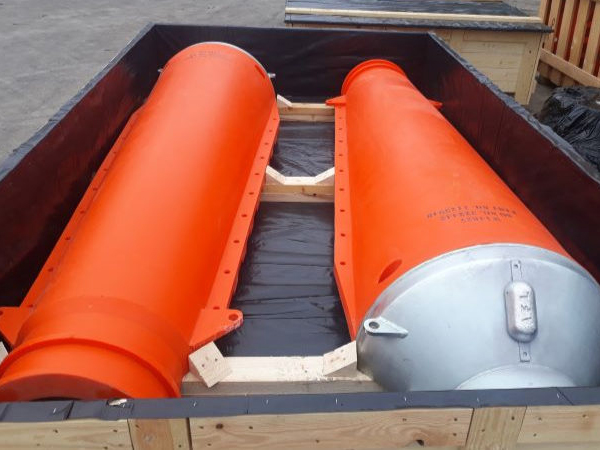
Introduction to Bend Stiffeners for Flexible Risers
Bend stiffeners are not optional accessories in offshore engineering—they are critical lifelines that prevent catastrophic failure of flexible risers at their termination points. A bend stiffener must match the riser's specific curvature, load profile, and environmental exposure; a generic substitute invites fatigue failure and million-dollar downtime. This article dissects the technical and commercial realities of sourcing bend stiffeners from OEM manufacturers, arguing that factory-direct procurement, when done right, delivers both safety and cost efficiency—but only if buyers know what to demand.
Key Functions and Design Principles of Bend Stiffeners
The primary function of a bend stiffener is to impose a controlled stiffness gradient along the riser's upper section, thereby limiting bending stress and curvature to acceptable levels under wave, current, and vessel motion. A well-designed stiffener does not simply add rigidity; it redistributes strain away from the critical interface between the flexible pipe and its end fitting. Consider a typical deepwater application: without a stiffener, the riser's bend radius at the hang-off point can drop below the minimum allowable, leading to tensile armor wire fatigue and eventual rupture.
Design principles hinge on polyurethane elastomer chemistry, conical geometry, and finite element analysis (FEA) validation. Critics of low-cost alternatives point out that recycled or poorly cured elastomers exhibit unpredictable creep and temperature sensitivity. In contrast, OEM-designed stiffeners use proprietary formulations tested to API 17J and ISO 13628 standards. The table below contrasts key design parameters between generic and OEM bend stiffeners.
| Parameter | Generic Stiffener | OEM Stiffener |
|---|---|---|
| Elastomer type | Mixed recycled PU | Virgin PU, hydrolysis-resistant |
| Stiffness gradient | Linear approximation | FEA-optimized exponential |
| Fatigue life (cycles) | 10^5–10^6 | >10^7 |
| Certification | Self-declared | API 17J / DNV-ST-0164 |
OEM Manufacturing: Benefits and Customization Options
OEM manufacturing for bend stiffeners is not merely a branding exercise; it is a vertically integrated process that begins with riser data and ends with a traceable, tested component. The core benefit is design ownership: an OEM can tailor the stiffener's inner diameter, outer profile, and material hardness to the exact riser termination. For instance, a 6-inch ID flexible riser with a 10-degree static offset requires a different stiffener geometry than an 8-inch ID riser with dynamic vessel motions.
Customization options include:
Variable stiffness zones achieved through multi-durometer casting, allowing softer entry and stiffer root.
Integrated bend restrictors for additional locking against axial slip.
Corrosion-resistant inserts for splash zone applications.
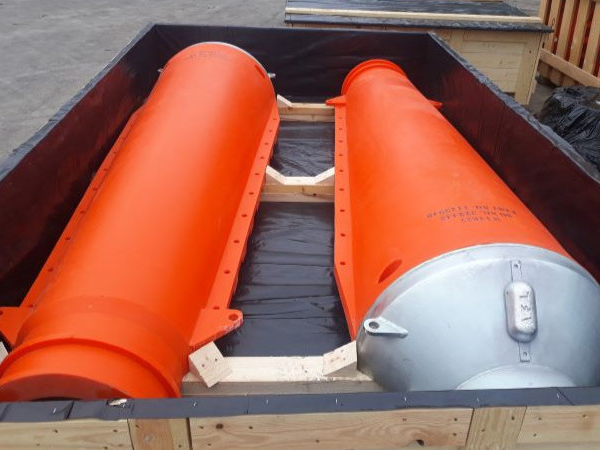
Factory Price Factors and Cost Analysis
Factory price for bend stiffeners is not a single number but a function of five variables: material volume, elastomer grade, mold complexity, testing regime, and order quantity . Consider a mid-size project requiring 12 stiffeners for 6-inch ID risers. A non-OEM broker might quote $15,000 each, totaling $180,000. A direct OEM factory, using existing molds, might quote $19,000 each but include free FEA revalidation and a 5-year warranty—total $228,000. The higher sticker price is actually lower lifetime cost when downtime risk is factored.
Selecting a Reliable OEM Manufacturer for Bend Stiffeners
Vetting an OEM manufacturer of Bend Stiffeners for Flexible Risers requires more than checking a website. The decisive question is: can they show you a failed stiffener from a competitor and explain exactly why it failed? A true OEM will discuss creep rupture, hydrolysis, and interfacial slip without hesitation.